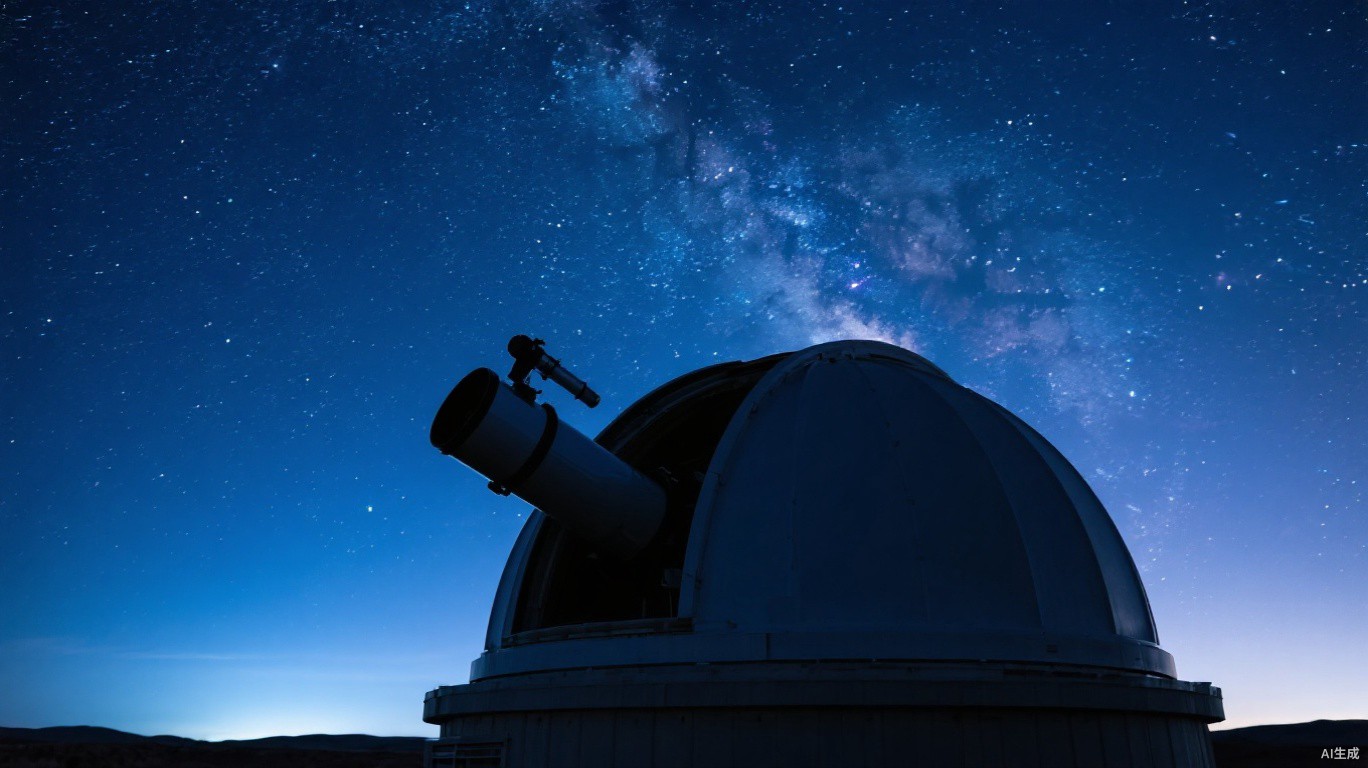
When astronomers look deep into space, they also look back in time. Light from distant galaxies has traveled for billions of years to reach us, so the faintest objects in a telescope image show the universe as it was long ago. The James Webb Space Telescope, launched in late 2021, was designed specifically to push that view further than ever, toward the era when the first galaxies were taking shape.
Its observations have opened a new chapter in cosmology. They have confirmed some long-held ideas, challenged others, and given scientists a much richer picture of how the universe grew from a nearly uniform cloud of gas into the structured cosmos we see today.
Why Infrared Matters
The universe has been expanding since the Big Bang. As light travels across that expanding space, its wavelength stretches, a process astronomers call redshift. Light that left an early galaxy as ultraviolet or visible radiation arrives at Earth stretched into the infrared.
That is why Webb was built as an infrared observatory. Its large segmented mirror, roughly six and a half meters across, collects faint light, and its instruments are tuned to infrared wavelengths. To detect these faint heat signals, the telescope must be extremely cold, so it sits far from Earth behind a tennis-court-sized sunshield that blocks heat from the Sun, Earth, and Moon.
Earlier telescopes, including the Hubble Space Telescope, made extraordinary discoveries about distant galaxies. But Hubble was optimized mainly for visible and ultraviolet light, which limited how far back it could see. Webb’s infrared sensitivity extends that reach into the universe’s first few hundred million years.
Surprises in the Young Universe
One of the most discussed themes of the Webb era is that some early galaxies appear brighter, more numerous, or more developed than many models predicted. Astronomers have reported candidate galaxies that seem to have formed stars rapidly and efficiently at very early times.
These observations have prompted lively scientific debate. Possible explanations researchers are exploring include:
- Star formation in the early universe may have been more efficient than previously assumed
- Some galaxies may contain unusually bright young stars or growing black holes that boost their light
- Estimates of galaxy masses, which depend on assumptions about stellar populations, may need revision
- Some candidates may turn out to be closer, dustier objects that only mimic the appearance of distant ones
Importantly, scientists emphasize that early findings require careful follow-up. Initial distance estimates often rely on the colors of a galaxy in images, while more precise measurements require spectroscopy, which splits light into its component wavelengths. Webb’s spectrographs have confirmed the distances of many early galaxies, while also showing that some initial candidates were not as distant as first thought.
“Every time we get a sharper view, the universe turns out to be a bit more inventive than our models,” said an astrophysicist at a research university in Arizona.
Reading the Chemistry of Distant Galaxies
Beyond counting and measuring galaxies, Webb allows astronomers to study their chemistry. The earliest stars formed almost entirely from hydrogen and helium, the elements produced in the Big Bang. Heavier elements such as carbon, oxygen, and iron were forged later inside stars and scattered into space when those stars died.
By analyzing the spectra of distant galaxies, researchers can detect signatures of these heavier elements and estimate how much chemical enrichment had occurred at various times. This helps reconstruct how quickly generations of stars lived and died, enriching the gas from which later stars and planets would form.
Webb also contributes to understanding the era of reionization, a period when radiation from early stars and galaxies transformed the neutral hydrogen gas filling the universe into an ionized state. Pinning down when and how this happened is a central goal of modern cosmology.
Black Holes and Galaxy Growth
Another area of active research involves supermassive black holes. Most large galaxies today host a black hole millions or billions of times more massive than the Sun at their centers. How these giants grew so large is an open question.
Webb has identified signs of actively feeding black holes in galaxies from the early universe. Studying them helps scientists explore whether black holes and their host galaxies grew together, and how energy released by black holes may have influenced star formation in their surroundings.
Science as an Ongoing Conversation
It is tempting to describe new observations as overturning everything we know, but that is rarely how science works. The broad framework of cosmology, including the expansion of the universe and the role of dark matter in shaping cosmic structure, remains well supported. What Webb is refining are the details: how quickly galaxies formed, how efficiently they made stars, and how their contents evolved.
That process is collaborative and gradual. Observations are proposed, debated, tested with additional data, and incorporated into improved models. Results from Webb are often combined with data from ground-based observatories and other space telescopes to build a fuller picture.
Looking Ahead
Webb is expected to operate for many years, and each observing cycle brings new targets, from distant galaxies to planets orbiting other stars. As data accumulate, astronomers will be able to move from individual intriguing objects to larger statistical samples, which will clarify which early findings represent typical galaxies and which are rare exceptions.
For the rest of us, the Webb era offers something remarkable: a chance to watch science refine its understanding of cosmic history in real time, one faint and ancient point of light at a time.